



Hair Shedding vs. Hair Breakage: How to Tell the Difference

Finding more hair in your brush, shower, or hands can be concerning. But before deciding what your hair needs, it helps to understand what you are actually seeing.
Hair shedding and hair breakage can create similar changes in fullness, but they begin in different places. Shedding releases a complete strand from the follicle, while breakage occurs when the shaft fractures somewhere along its length.
One begins beneath the scalp's surface. The other happens along the strand.
Recognizing that difference can help you make more informed hair care decisions and understand when a change may be temporary, related to daily practices, or worth discussing with a medical professional.
Key Takeaways
-
Hair shedding releases a complete strand from the follicle.
-
Hair breakage occurs when the shaft fractures before the strand naturally sheds.
-
Shed hairs are often full-length and may have a small, pale club-shaped end.
-
Broken hairs are more likely to be shorter, uneven, split, or frayed.
-
A stressful event, illness, medication change, or nutritional deficiency may contribute to excessive hair shedding.
-
Heat, friction, chemical treatments, and repeated tension can contribute to breakage.
-
Persistent shedding, visible hair thinning, scalp symptoms, or patchy loss should be evaluated by a qualified medical professional.
What Is the Difference Between Hair Shedding and Hair Breakage?
The simplest difference is where the strand separates.
Hair shedding happens at the level of the follicle. A mature strand reaches the end of its cycle and is released from the scalp.
Hair breakage happens along the shaft. The strand snaps at a weakened point, leaving part of the hair behind.
This distinction matters because the two concerns do not have exactly the same causes or solutions. Changes in shedding require attention to the follicle, the hair growth cycle, and possible internal triggers. Breakage requires closer attention to the condition of the shaft and the physical, thermal, or chemical stress placed on it.
For a closer look at the structures involved, explore Hair Anatomy: The Structure of Hair From Root to Shaft.
What Does Hair Shedding Look Like?
A shed hair is generally a complete strand. It may be close to the full length of the surrounding hair and can have a small, pale, club-shaped end.
That pale end is not the entire follicle being pulled from the scalp. It is a keratinized club hair formed as the strand completes its active growth period. The hair follicle remains within the skin and may begin producing new growth as it enters another cycle.
You may notice shed hairs:
-
Collecting near the shower drain
-
Remaining between your fingers after washing
-
Accumulating in a brush or comb
-
Appearing on clothing, bedding, or the floor
-
Measuring approximately the same length as your surrounding hair
Some daily shedding is expected. The American Academy of Dermatology notes that losing approximately 50 to 100 hairs a day can be normal. However, the visible amount may vary with washing frequency, hair length, texture, and styling habits.
The number of strands seen on wash day does not always represent one day of shedding. Curly and coily hair, for example, may retain released strands within the curl pattern until the hair is washed or detangled.
Why Does Hair Naturally Shed?
Every follicle moves through a repeating hair growth cycle:
-
Anagen: The active growth phase
-
Catagen: A short transition phase
-
Telogen: A resting phase
-
Exogen: The release of the mature strand
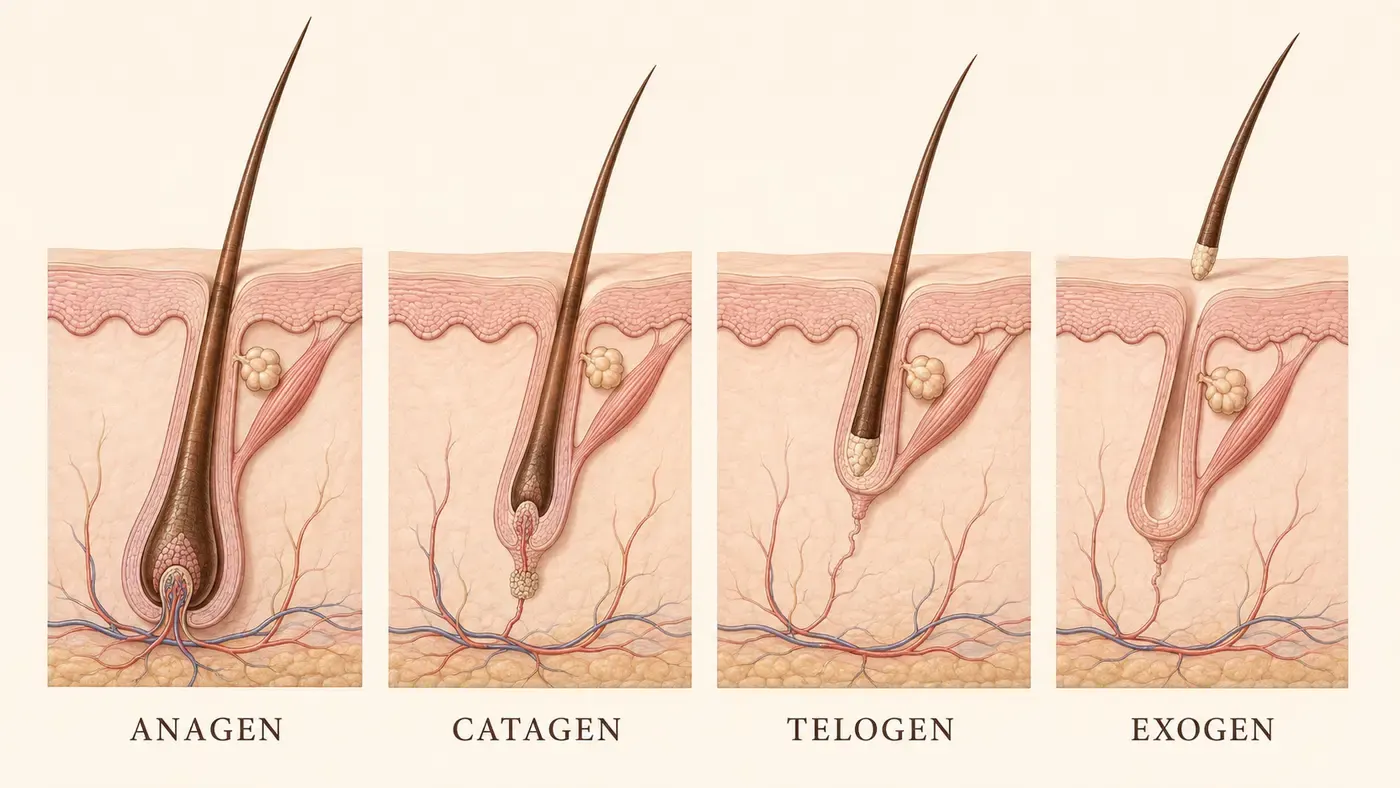
Each follicle cycles independently. This staggered timing helps prevent all scalp hairs from being released at once.
During exogen, the mature club hair separates from the follicle. This makes room for the cycle to continue and is a normal part of hair renewal.
Understanding the growth cycle helps place everyday shedding into context: seeing individual full-length strands does not automatically mean the follicles have stopped producing hair.
What Is Excessive Hair Shedding?
Excessive hair shedding means that more strands than usual are entering or completing the shedding phase. A common form is telogen effluvium, which can occur when a larger proportion of follicles shifts into the resting stage around the same time.
This shift may follow:
-
A high fever or illness
-
Surgery
-
Childbirth
-
Rapid weight loss
-
A significant dietary change
-
Certain medications
-
Hormonal changes
-
A stressful event
-
A period involving a lot of physical or emotional stress
The increased shedding may not appear immediately. It can become noticeable several months after the triggering event because the affected follicles must move through the resting phase before releasing their strands.
Certain medical conditions and nutritional deficiencies may also contribute to changes in shedding. Proper nutrition supports normal body function, but supplements should not be treated as a universal solution. Excessive intake of some nutrients can also be harmful, and supplementation is best guided by an identified need and professional advice.
What Does Hair Breakage Look Like?
Broken hairs tend to be shorter than the surrounding strands because they have fractured somewhere along the shaft.
Signs of breakage can include:
-
Short strands without a club-shaped end
-
Uneven lengths throughout the hair
-
Split or frayed ends
-
Small pieces of hair around the sink or styling area
-
Increased tangling
-
Roughness or a loss of flexibility
-
Short hairs concentrated near frequently manipulated areas
-
Reduced fullness through the mid-lengths or ends
Breakage can sometimes be confused with new growth. New hairs usually emerge close to the scalp and may have soft, tapered ends. Broken hairs can appear anywhere along the length and may have blunt, split, or irregular ends.
No single visual clue provides a medical diagnosis. However, examining the length, location, and ends of several strands can help identify the more likely pattern.
Why Does Hair Break?
The visible hair shaft consists of nonliving, keratinized cells. Once severely damaged, it cannot biologically heal itself. Conditioning products can reduce friction, improve lubrication, and temporarily reinforce weakened areas, but they cannot return a fractured strand to its original structure.
Breakage develops when the stress placed on a strand becomes greater than the shaft can tolerate.
Common contributors include:
Mechanical Stress
Aggressive brushing, repeated backcombing, rough towel drying, tight hairstyles, and detangling without adequate lubrication can increase tension and friction.
Heat Exposure
Frequent use of flat irons, curling irons, and high-temperature blow-drying can remove moisture and weaken the structural integrity of the shaft, particularly when heat is repeatedly applied to the same area.
Chemical Treatments
Hair color, bleaching, permanent waving, and chemical straightening alter components of the hair fiber. When chemical treatments are frequent, overlapping, or combined with high heat, the shaft may become more vulnerable to fracture.
Environmental Weathering
Sun exposure, humidity changes, water exposure, and daily friction gradually weather the cuticle. Because the ends are the oldest part of the strand, they have usually experienced the most cumulative wear.
Sunlight is another source of environmental weathering. Our physician-led guide to UVA and UVB damage to hair and scalp explains how ultraviolet exposure can degrade proteins, fade pigment, and make the shaft more vulnerable to breakage.
Harsh Treatments and Repeated Tension
Harsh treatments do not affect every person’s hair in the same way. Strand diameter, curl pattern, porosity, previous damage, and styling frequency all influence how much stress the hair can tolerate.
Curl pattern is only one part of this picture. Origenere’s guide to the Andre Walker Hair Typing System explains why density, diameter, porosity, elasticity, and scalp condition should also inform a complete hair profile.
Hair Shedding vs. Hair Breakage at a Glance
|
Feature |
Hair shedding |
Hair breakage |
|---|---|---|
|
Where separation occurs |
At the follicle |
Along the hair shaft |
|
Typical strand length |
Often full-length |
Often shorter or uneven |
|
Appearance of the end |
May have a pale club-shaped end |
May appear blunt, split, or frayed |
|
Common location noticed |
Shower, brush, pillow, or clothing |
Sink, styling area, shoulders, or throughout the hair |
|
Common contributors |
Natural cycling, illness, stress, hormonal changes, nutrition, or medication |
Friction, heat, tension, chemical processing, and weathering |
|
Primary area of concern |
Follicle and growth cycle |
Structural condition of the shaft |
Can Shedding and Breakage Happen at the Same Time?
Yes. A person can experience shedding from the follicle while also having breakage along the lengths.
For example, increased shedding may follow an illness or major life event, while the remaining strands may simultaneously be exposed to frequent coloring, heat, or tension. When both occur together, the volume change may appear more noticeable.
This is why counting hairs alone does not always explain what is happening. Look at:
-
Whether the strands are full-length or fragmented
-
Whether the ends have a club shape or appear fractured
-
Where shorter hairs are concentrated
-
Whether the scalp has visible symptoms
-
Whether density has changed gradually or suddenly
-
Whether a health, medication, diet, or styling change preceded the concern
How to Reduce Avoidable Hair Breakage
A strand-preserving routine focuses on reducing unnecessary friction, heat, and tension.
Conditioning is one of the most direct ways to reduce avoidable breakage because it improves slip and lowers friction during detangling. Formulas containing hydrolyzed proteins, pro-vitamin B5, and conditioning oils can also help smooth and temporarily reinforce weathered areas of the shaft. Naturale Conditioner combines hydrolyzed soy protein and pro-vitamin B5 with olive and soybean oils to support softness, manageability, and stronger-feeling strands.
Consider the following practices:
-
Detangle gently, beginning near the ends and gradually moving upward.
-
Use a wide-tooth comb or an appropriate detangling brush.
-
Distribute conditioner through the lengths and ends before detangling wet hair to improve slip and reduce friction.
-
Avoid rubbing the hair aggressively with a towel.
-
Limit repeated high-temperature styling.
-
Avoid overlapping bleach, relaxer, or permanent color on previously processed areas.
-
Alternate tight hairstyles with lower-tension options.
-
Protect the ends, which have experienced the most cumulative weathering.
-
Pay attention to changes in elasticity, tangling, and roughness.
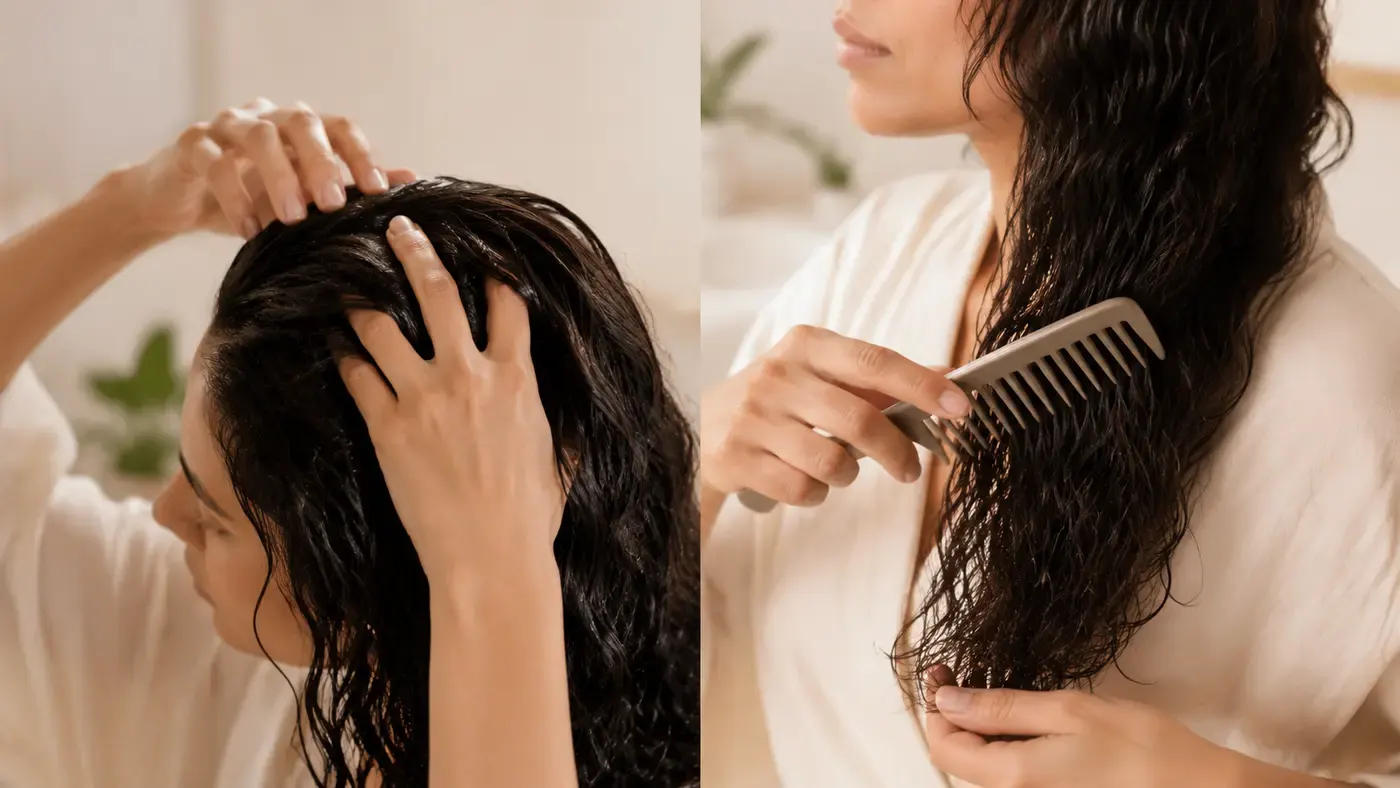 Gentle washing and detangling practices can help reduce unnecessary friction and tension.
The goal is not to avoid all styling. It is to understand the cumulative amount of stress being placed on the fiber and adjust the routine before visible fracture becomes widespread.
How to Support the Scalp During Periods of Shedding
Hair care cannot correct every internal cause of shedding, but a consistent routine can support scalp comfort and minimize additional damage to retained strands.
A balanced approach may include:
-
Cleansing often enough to remove excess oil, sweat, and buildup
-
Avoiding aggressive scratching or scrubbing
-
Conditioning the lengths to reduce friction
-
Using gentle tension during washing and styling
-
Eating a balanced diet that supports proper nutrition
-
Tracking when the change began and any events that preceded it
-
Seeking professional guidance before beginning supplements or hair-loss treatments
The scalp is the environment in which hair follicles reside, but scalp care and medical treatment are not interchangeable. Learn more about the scalp’s structure in Mastering Scalp Anatomy: An Essential Guide for Hair Health.
When Should You See a Dermatologist?
Consider speaking with a board-certified dermatologist or another qualified healthcare professional if you notice:
-
Sudden or persistent excessive hair shedding
-
Progressive hair thinning
-
Smooth or irregular bald spots
-
Pain, burning, significant itching, redness, or scaling
-
Scarring or changes in the scalp’s surface
-
Eyebrow or eyelash loss
-
Hair loss accompanied by fatigue, weight changes, or other symptoms
-
Continued breakage despite gentler care
-
A concern that may be associated with medications or medical conditions
Different types of hair loss can look similar without a professional assessment. Effective treatment depends on identifying the cause rather than treating every change as ordinary shedding or cosmetic damage.
Conclusion
Hair shedding and hair breakage may both reduce the amount of hair you see or feel, but they describe different processes.
Shedding releases a complete strand from the follicle as part of the hair growth cycle. Breakage occurs when the shaft fractures along its length. Full-length strands with a small club-shaped end are more consistent with shedding, while short, uneven, frayed strands are more consistent with breakage.
Understanding where the separation occurs provides a clearer starting point. It can guide gentler daily practices, help you recognize changes in the growth cycle, and clarify when professional evaluation may be appropriate.
The goal is not to prevent every strand from leaving the scalp. Normal shedding is part of renewal. The goal is to recognize when the pattern has changed—and respond to what the hair is actually showing you.
Frequently Asked Questions
How can I tell if my hair is shedding or breaking?
Examine several strands. Shed hairs are often close to the full length of your hair and may have a small, pale club-shaped end. Broken hairs are usually shorter and may have blunt, split, or frayed ends.
Does a white bulb mean the follicle came out?
Usually, no. The pale club-shaped end on a naturally shed hair is keratinized material from the completed strand. The living follicle remains inside the skin.
Is it normal to shed hair every day?
Yes. Daily shedding is part of the normal hair growth cycle. The American Academy of Dermatology states that approximately 50 to 100 shed hairs per day can be normal, although the amount you notice can vary.
Can breakage make hair look thinner?
Yes. Widespread breakage can reduce fullness through the lengths and create uneven density. However, progressive thinning near the scalp may involve the follicles and should not automatically be attributed to breakage.
Are short hairs always breakage?
No. Short hairs may represent new growth or breakage. New hairs usually emerge from the scalp with tapered ends, while broken hairs may appear at varying points and have blunt or frayed ends.
Can hair products stop excessive shedding?
Cosmetic products can support scalp comfort and protect the visible shaft, but they cannot correct every cause of excessive shedding. Persistent or unusual shedding requires evaluation to determine whether illness, stress, nutrition, medication, hormones, or another factor may be involved.
Sources
-
American Academy of Dermatology Association: Do You Have Hair Loss or Hair Shedding?
-
McMichael AJ. Hair Breakage in Normal and Weathered Hair: Focus on the Black Patient
-
Understanding Breakage in Curly Hair, British Journal of Dermatology.
-
Hair Breakage During Combing: I. Pathways of Breakage, Journal of Cosmetic Science.
-
Hair Breakage—How to Measure and Counteract, Journal of Cosmetic Science.
Editorial note: This article is intended for education and does not diagnose or treat hair-loss conditions.
Leave a comment