



Bamboo Silica for Hair: Benefits, Evidence and Safety

Bamboo silica for hair has become increasingly popular in dietary supplements designed to support stronger hair, skin and nails. Bamboo is a concentrated botanical source of silica, but the evidence for its hair benefits is more limited than many supplement claims suggest.
Available human research indicates that certain absorbable forms of silicon may support the strength, thickness and tensile properties of existing hair strands. That is different from proving that bamboo silica for hair accelerates follicular growth, increases hair density or treats hair loss.
Understanding that distinction makes it easier to evaluate bamboo extract supplements intelligently—and to recognize where this botanical may fit within a broader approach to healthier hair.
Key Points
- The bamboo plant can accumulate silica, but the amount varies by species, plant part and extraction method.
- Silica, silicon and orthosilicic acid are related terms, but they are not interchangeable.
- A small human trial found that one stabilized form of orthosilicic acid improved certain physical properties of fine hair.
- Direct evidence that bamboo silica for hair increases follicular growth, density or the number of growing hairs is lacking.
- Supporting the hair cuticle and internal fiber may help reduce breakage and improve length retention without changing the follicle’s growth rate.
- There is no established recommended daily intake for silicon.
- Supplement quality depends on the source, form, standardization and complete formulation—not simply a claim of high silica content.
- Bamboo-derived silica should be considered one part of a complete nutritional approach rather than a stand-alone treatment for hair loss.
What Is Bamboo Silica?
Bamboo is a member of the grass family and has been valued for centuries for its strength, flexibility and range of practical uses. The bamboo plant also has an unusual ability to accumulate silicon from the soil. Once absorbed, silicon may be deposited within bamboo stems, shoots and leaves in silica-containing forms.
Bamboo extract is now used in hair products, hair care products and oral supplements. Common names on product labels include bamboo extract, bamboo silica, bamboo leaf extract and bamboo shoot extract. Bambusa vulgaris is one species associated with commercial bamboo materials, although supplements may use other species.
The final composition depends on:
- The bamboo species
- Whether the raw material comes from a bamboo leaf, stem or bamboo shoots
- The extraction process
- The amount of silica present
- Whether the extract is standardized
- The chemical form of silicon in the finished product
Research comparing several bamboo species has demonstrated meaningful differences in leaf silica content. This variability is one reason a supplement should be evaluated by its specific composition rather than by the word “bamboo” alone.

Silicon, Silica and Orthosilicic Acid
These terms are often used as though they mean the same thing:
- Silicon is a naturally occurring element.
- Silica generally refers to compounds made from silicon and oxygen.
- Silicic acids are water-soluble forms of silica.
- Orthosilicic acid is the soluble form predominantly absorbed by the human body.
- Stabilized orthosilicic acid is a supplemental form designed to remain available in solution.
The phrase “organic silica” is also frequently used in supplement marketing. It usually describes silica obtained from a botanical source; it does not necessarily identify a unique chemical form or prove superior absorption.
This distinction matters because the amount of silica present in an extract does not, by itself, establish how much silicon the body can absorb. A large amount of bamboo extract may not necessarily provide more bioavailable silicon than a smaller amount of a clearly identified, standardized form.
Is Bamboo Silica for Hair Effective?
The most scientifically supportable conclusion is that certain silicon forms may help support the physical quality of existing hair. Evidence that bamboo silica for hair directly stimulates new follicular growth remains insufficient.
Hair has two biologically different components:
- The living follicle below the scalp, where hair growth is regulated.
- The nonliving hair shaft that emerges above the scalp.
A nutrient or supplement may influence hair-fiber quality without increasing the speed at which the follicle produces hair. Supporting stronger hair strands may help reduce breakage and improve the appearance of your hair, but it does not necessarily change the number of actively growing follicles.
This distinction also applies when separating breakage from shedding and progressive thinning. These changes can look similar cosmetically, but they arise through different biological processes.
For a detailed explanation of the structures involved, explore Hair Anatomy: The Structure of Hair From Root to Shaft.

Hair Strength Is Not the Same as Hair Growth
The hair shaft is composed primarily of keratin and organized into structural layers. The condition of its cuticle and internal cortex affects how well it tolerates stretching, brushing, heat, chemical processing and environmental exposure.
If a nutritional intervention improves the tensile properties of the hair fiber, the hair may be less vulnerable to breakage. Over time, reduced breakage can support length retention and contribute to the appearance of healthier hair or more lustrous hair.
That is different from altering the follicle below the skin.
Follicular growth depends on complex interactions involving genetics, hormonal signaling, health status, age, available nutrients and the hair-growth cycle. Current research does not establish that bamboo silica for hair extends the anagen phase of the hair growth cycle or activates inactive follicles.
It is therefore important not to convert evidence about hair strength into a claim about new hair growth.
What Does the Human Research Show?
The most relevant human hair study did not evaluate bamboo extract itself. It evaluated choline-stabilized orthosilicic acid, or ch-OSA.
In this randomized, double-blind, placebo-controlled trial, 48 women with fine hair received either ch-OSA supplying 10 milligrams of silicon daily or a placebo for nine months. Researchers measured hair morphology and mechanical properties.
Compared with placebo, the supplemented group demonstrated improvements in certain measures of hair tensile strength, including elasticity and breaking load. The researchers also reported an increase in hair cross-sectional area.
These findings are relevant to bamboo silica for hair, but they require careful interpretation:
- The study was small.
- It included women with fine hair rather than people with a diagnosed form of hair loss.
- It evaluated a stabilized orthosilicic-acid formulation, not bamboo extract.
- It measured hair-fiber properties rather than follicle count or growth rate.
- One clinical study is not enough to establish that all silica or bamboo extract supplements produce the same result.
The evidence therefore suggests a preliminary role for certain silicon forms in hair-fiber quality. It does not establish bamboo silica for hair as a treatment for androgenetic alopecia, alopecia areata, follicular miniaturization or other causes of hair loss.
Does Silica Make Hair Grow Faster?
There is not enough clinical evidence to conclude that silica makes hair follicles grow faster.
The rate and duration of healthy hair growth depend on many factors, including:
- Genetics
- Hormonal signaling
- Age
- Nutritional status
- Essential nutrients and amino acids
- Illness and medications
- Scalp health
- The timing of the hair-growth cycle
Silicon has been studied more extensively in relation to connective tissue and bone health than hair growth. It may participate in processes associated with collagen synthesis and the production of collagen, but neither point proves that a bamboo supplement stimulates the follicle.
Claims that bamboo silica for hair “boosts blood circulation,” “strengthens follicle roots” or directly “reduces hair loss” go beyond the available evidence.
Bamboo Silica Versus Horsetail
Bamboo and horsetail are both botanical sources of silica. Neither should be judged solely by a claimed silica percentage.
| Consideration | Bamboo extract | Horsetail extract |
|---|---|---|
| Botanical source | A specified bamboo species | Equisetum arvense or another identified species |
| Silica content | Varies by species, plant part and extract | Also varies by species and preparation |
| Standardization | Product-specific | Product-specific |
| Bioavailability | Depends on the final silicon form | Depends on the final silicon form |
| Direct clinical hair evidence | Limited | Limited |
| Product-quality concerns | Identity, purity and testing | Identity, purity and testing |
One source is not automatically superior because its raw material contains a higher percentage of silica. The final preparation and the form of silicon delivered are more meaningful than a botanical comparison made without standardized testing.
For this reason, comparisons of horsetail and bamboo silica for hair should examine the finished formulations rather than relying on claims such as “three times more potent.”
Learn more in Harnessing Horsetail Benefits for Hair.
Food Sources of Silicon
Silicon is naturally present in a variety of foods and beverages. Dietary sources can include:
- Whole grains
- Oats
- Barley
- Leafy greens and other vegetables
- Bananas
- Legumes
- Some mineral waters
The total silicon content of a food does not always predict how much the body will absorb. Solubility, food processing and chemical form all affect bioavailability.
A balanced diet supplies many of the essential nutrients and amino acids required for normal tissue and hair-fiber production. A single ingredient cannot compensate for an otherwise inadequate diet or an underlying medical cause of hair loss.
A varied diet should therefore remain the foundation of nutritional support, whether or not bamboo silica for hair is included in a routine.
For a broader nutritional perspective, read Best Fruits and Vegetables for Healthy Hair and Scalp and What Phytonutrients Mean for Health and Hair Care.
How to Evaluate Bamboo Extract Supplements
A high-quality dietary supplement should make it possible to understand what you are taking. Look beyond botanical marketing language and evaluate the complete label.
1. Identify the Botanical Source
The label should clearly identify bamboo rather than relying on a vague “plant silica” description. Ideally, the manufacturer should specify the plant part and extract.
2. Look for Standardization
A statement such as “bamboo extract powder” does not reveal how much silica or elemental silicon the product provides. Standardization gives the ingredient more meaning, although the method and unit still need to be clear.
3. Distinguish Extract Weight From Silicon Content
For example, 300 milligrams of bamboo extract does not mean the serving contains 300 milligrams of silicon. These are different measurements.
Labels that advertise “high silica content” or “enough silica for hair growth” should be evaluated carefully. Neither phrase establishes bioavailability or clinical effectiveness.
4. Consider the Complete Formula
Hair biology is not governed by one ingredient. Nutritional status, oxidative stress, hormonal pathways, the hair-growth cycle and the condition of the hair cuticle can all influence hair quality and retention.
A thoughtfully constructed supplement may combine complementary nutrients and botanicals rather than relying on bamboo silica for hair as a stand-alone solution. Depending on the purpose of the formula, other botanicals may include saw palmetto, pumpkin seed, horsetail, nettle or ashwagandha.
See What Are the Main Components of Natural Hair Growth Vitamins? for a broader formulation overview.
5. Examine Quality Controls
Consider whether the manufacturer provides information about:
- Ingredient identity
- Purity
- Contaminant testing
- Manufacturing standards
- Recommended serving
- Potential side effects
- Warnings and contraindications
“Natural” does not replace quality control.
How Much Bamboo Silica Should You Take for Hair?
There is no established Recommended Dietary Allowance or standard therapeutic dose for silicon.
This means universal statements such as “everyone should take 10 to 30 milligrams per day” are not sufficiently precise. Supplement labels may report:
- Bamboo-extract weight
- Silica content
- Elemental silicon
- Orthosilicic acid
- A proprietary or stabilized complex
These values cannot be compared milligram for milligram without knowing what is being measured.
The clinical study discussed above used a stabilized orthosilicic-acid product supplying 10 milligrams of silicon daily. That study dose should not automatically be applied to every product containing bamboo silica for hair or to every individual.
Follow the instructions for the specific product. Speak with a healthcare provider when medical conditions, medications or other supplements are involved.
How Long Does Bamboo Silica Take to Affect Hair?
Hair changes slowly. The most relevant human hair study lasted nine months, which is more informative than promises of dramatic results within a few weeks.
Any change also depends on what is being measured:
- Less breakage
- Improved fiber strength
- Better condition of the hair cuticle
- Greater apparent length retention
- Changes in hair diameter
- New follicular growth
These are not equivalent outcomes.
Regular use of bamboo silica for hair cannot guarantee visible results, and the existing evidence does not establish a universal timeline. If someone notices less breakage after several months, that does not necessarily mean the follicles are growing faster.
Continued shedding, patchy loss or progressive thinning should not be managed by adding silica alone.
Bamboo Silica for Hair: Side Effects and Safety
Oral silica supplements are generally described as well tolerated when used according to product directions, but safety data for every botanical source and formulation are not equally extensive.
Potential side effects and considerations include:
- Digestive discomfort
- Allergic reactions to an ingredient in the complete formula
- Differences in dose and purity among products
- Use alongside multiple supplements with overlapping ingredients
- Pregnancy or breastfeeding
- Kidney disease or impaired mineral handling
- Medication use
- Unexplained or medically significant hair loss
Because there is no established daily requirement for silicon, taking more bamboo silica for hair should not be assumed to provide greater benefit.
Consult a healthcare provider before beginning a new dietary supplement during pregnancy or breastfeeding, when managing a medical condition, or when taking prescription medication.
Sudden shedding, patchy loss, scalp inflammation or progressive thinning also deserves appropriate evaluation. Maintaining a healthy scalp and a gentle hair care routine can support hair quality, but neither replaces medical assessment when warning signs are present.
Bamboo Silica Within a Broader Botanical Formula
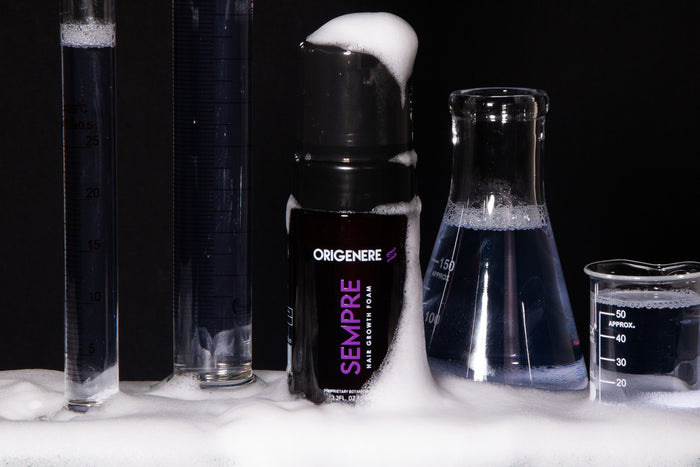
Bamboo extract is included in Sempre Hair Growth Organonutrients, a physician-formulated supplement designed to provide broader nutritional and botanical support rather than relying on silica alone.
The formula combines bamboo silica for hair with complementary botanicals and nutrients selected to address multiple dimensions of hair wellness. This broader formulation strategy is important because available evidence does not support treating bamboo silica as a stand-alone solution for hair loss.

Explore Sempre Hair Growth Organonutrients
The Physician Perspective
Bamboo silica for hair occupies a reasonable but specific place in hair wellness.
Its most plausible benefit is supporting the structural quality of existing hair, particularly tensile strength and resistance to breakage. That can matter: hair that breaks less readily may retain more length and appear healthier over time.
But stronger hair is not the same as faster follicular growth. Bamboo-derived silica should not be presented as a proven treatment for hair loss, follicular miniaturization or reduced density.
The most credible approach is to evaluate bamboo silica for hair within a complete nutritional and clinical picture—one that considers diet, health history, hair-fiber damage, the hair-growth cycle and the underlying cause of any thinning or shedding.
Bamboo Silica for Hair: Frequently Asked Questions
What is bamboo silica?
Bamboo silica refers to silica obtained from a bamboo-derived extract. The amount and form vary by bamboo species, plant part and manufacturing process.
Is bamboo silica for hair effective?
Certain absorbable forms of silicon may support the strength and tensile properties of existing hair. Direct evidence for bamboo extract specifically is limited.
Does bamboo silica make hair grow faster?
There is not enough clinical evidence to conclude that it increases the follicle’s growth rate.
Can silica reduce hair breakage?
Preliminary human evidence suggests that stabilized orthosilicic acid may improve certain mechanical properties of fine hair. This could make hair more resistant to breakage, although more research is needed.
Can bamboo silica treat hair loss?
Bamboo silica is not an established treatment for androgenetic alopecia, alopecia areata, follicular miniaturization or other medical causes of hair loss.
What is the difference between silica and silicon?
Silicon is an element. Silica refers to silicon-oxygen compounds. Orthosilicic acid is a soluble form of silicon that can be absorbed by the body.
Is bamboo silica more bioavailable than horsetail?
That cannot be determined from the botanical source alone. Bioavailability depends on the final chemical form and product formulation.
How much bamboo silica should I take daily?
There is no established Recommended Dietary Allowance for silicon. Follow the directions for the specific product and consult a healthcare provider when appropriate.
How long does bamboo silica take to affect hair?
The most relevant human hair study lasted nine months. Claims of rapid hair growth are not supported by that evidence.
What are the potential side effects of bamboo silica?
Some people may experience digestive discomfort or allergic reactions to an ingredient in a complete supplement. Product quality, dose, health conditions, pregnancy, breastfeeding and concurrent medications should also be considered.
Can bamboo silica support stronger nails or skin elasticity?
Silicon has been investigated in relation to connective tissue, collagen production, skin elasticity and stronger nails. However, results from one form or formulation should not automatically be applied to every bamboo extract supplement.
References
- Wickett RR, Kossmann E, Barel A, et al. Effect of oral intake of choline-stabilized orthosilicic acid on hair tensile strength and morphology in women with fine hair. Archives of Dermatological Research. 2007.
- Martin KR. The chemistry of silica and its potential health benefits. Journal of Nutrition, Health & Aging. 2007.
- Sonarkhan MP, Singh L, Sungkaew S, Souvannakhoummane K, Thul ST. Silica and secondary metabolites as chemophenetic markers for characterization of bamboo species. Molecular Biology Reports. 2021.
- Barel A, Calomme M, Timchenko A, et al. Effect of oral intake of choline-stabilized orthosilicic acid on skin, nails and hair. Archives of Dermatological Research. 2005.
Nice and needful tutorials
Thanks a million times
Thanks for your great tutorials
Leave a comment